Spring
BestApr – May
Cherry blossoms at Schönbrunn, mild
Average low–high: 6–15°CMonthly rainfall: 50 mmCrowds: High (Easter + May Day)

Austria
The complete 2026 travel guide
Habsburg imperial capital preserved intact — palaces by the dozen, coffee-house culture UNESCO-listed, Mozart + Beethoven + Strauss walked these boulevards, and the sachertorte hasn't changed since 1832.
Free · No credit card · 2 minutes
The short answer
Yes — worth it for Classical Music, Imperial, Coffee Houses. Plan 3–4 days, ideally in Apr–May · Sep–Oct. Habsburg imperial capital preserved intact — palaces by the dozen, coffee-house culture UNESCO-listed, Mozart + Beethoven + Strauss walked these boulevards, and the sachertorte hasn't changed since 1832.
Go if you want
Think twice if
Vienna was the imperial Habsburg capital for 640 years (1278-1918) and remained the cultural capital of German-speaking Europe. 1.9 million people live in a compact old city surrounded by the Ringstrasse grand boulevard — within 15 minutes' walk you'll see Hofburg palace, St. Stephen's cathedral, Mozarthaus, Vienna State Opera, Albertina, Kunsthistorisches Museum, and a dozen UNESCO coffee houses. First-time visitors do 3-4 days; 5-7 unlocks day trips to Salzburg, Melk Abbey, or Bratislava.
The 23 districts (Bezirke) form concentric rings. 1st District (Innere Stadt) inside the Ringstrasse is the imperial core — Hofburg, Stephansdom, Albertina, grand coffee houses. 7th (Neubau) is hip boutique shopping. 6th (Mariahilf) is the major shopping spine + Naschmarkt food market. 2nd (Leopoldstadt) crosses the Danube Canal with the Prater amusement park + Ferris wheel. Schönbrunn Palace + Zoo sit in the 13th, 15-20 min out by metro.
Vienna is clean, safe, on-time, and slightly conservative — the city that took German coffee-house culture and made it an art. Kaffee und Kuchen (coffee + cake) at Demel or Café Central is a 2-hour ritual. Wiener schnitzel + sachertorte + tafelspitz are genuine food heritage. Budget: mid-range daily €180-220 — among Europe's more expensive capitals (on par with Paris, cheaper than London). Classical concerts are nightly + affordable (€30-60); Vienna Opera standing tickets famously €3-4.
Before you go
The details that change a trip — read these before you book.
Vienna State Opera standing tickets €3-4 are one of Europe's best cultural bargains — queue from 05:30 (Saturdays especially) or 90 min before show.
Schönbrunn gardens + Gloriette are free + one of Vienna's best walks without needing a palace ticket.
Coffee houses are cultural heritage — you're expected to sit 2-3 hours after ordering one drink. Bring a book.
The free "Night Line" buses (N routes) run 00:30-05:00 when U-Bahn stops, covering all major routes.
Sacher vs Demel: both claim original Sachertorte — Sacher is tourist-famous, Demel was actually the imperial supplier + many locals prefer Demel's cake.
Figlmüller's schnitzel is OVERSIZED (bigger than the plate) — one portion easily feeds 2; order one + a side salad to share.
Free first Sunday of each month at several museums — check Vienna tourist board website.
Day trip to Bratislava (1h 15m train, €15) = different country cheap — a classic Vienna add-on.
When to go
April-May (blossoms, mild 15-22°C) and September-October (crisp, fall colors). December for Christmas markets. Avoid November-early March (cold + grey).
Spring
BestCherry blossoms at Schönbrunn, mild
Summer
Warm 22-28°C, long days, tourist peak
Autumn
BestIdeal — crisp + colorful + quieter
Winter
Cold (-2 to 5°C), Christmas magic Dec, concert season
Bar color follows the average high (cool blue → hot coral); faded bars fall outside the best months. The shaded base is the average low.
Swipe for Jul–Dec →
How long
3–4 days is the sweet spot. Three days covers essentials: one day Hofburg + Stephansdom + Café Central + schnitzel, one day Schönbrunn, one day Belvedere + museums + Opera. Five days unlocks Prater, Naschmarkt, Heuriger wine taverns, classical concert, and a day trip to Bratislava or Wachau Valley.
Arrive, Hofburg + Stephansdom + schnitzel dinner
From the week plan
EssentialSchönbrunn Palace + Zoo + Gloriette
From the week plan
EssentialBelvedere (Klimt) + Albertina + Opera evening
From the week plan
EssentialKunsthistorisches + MuseumsQuartier + coffee houses
From the week plan
Worth itDay trip — Melk Abbey + Wachau Valley wine
From the week plan
If you have timePrater + Leopoldstadt + Naschmarkt
From the week plan
If you have timeSalzburg day trip OR concert + departure
From the week plan
If you have timeBudget
Yes — Vienna is one of the pricier cities we cover. Mid-range travelers spend about €200/day per person — pricier than 17 of the other 21 cities we cover. That's roughly €600–€800 for 3–4 days. Backpackers get by on €100/day; luxury starts around €750/day.
Backpacker
€100
per person · per day
Hostel + bakery breakfast + sausage stand + takeaway dinner + 24h transit + free attractions.
Mid-range
Most common€200
per person · per day
3-star hotel in 1st District + Beisl + concert + 24h transit + 1-2 paid attractions.
Luxury
€750
per person · per day
Sacher / Imperial / Sans Souci + Steirereck tasting + State Opera box seat + private guide.
Your trip, roughly
≈ €600–€800 for 3–4 days
mid-range · per person · before flights
Biggest markups first — what locals pay vs. the first price tourists get quoted.
State Opera standing ticket
17× markupBox office same day. · Tourist price: Tour operator bundle.
Schnitzel at Beisl
2.3× markupViennese Melange at coffee house
2× markupTourist price: Stephansplatz terrace.
Taxi airport to center
2× markupTourist price: Unofficial driver.
Schönbrunn palace ticket
1.9× markupGrand Tour direct. · Tourist price: "Skip-the-line" reseller.
Sachertorte slice
1.9× markupU-Bahn single
Book first
3 things in Vienna sell out or need a timed slot. Work backwards from your dates: Vienna State Opera (Staatsoper) first (3 months out). The timeline below runs from 3 months out down to 1–2 weeks out: 2 sights to book and your hotel.
Festival or gala evenings tickets sell out 6 months ahead.
Book 2-3 months ahead for Christmas markets (Dec 1-26) + ball season (Jan-Feb)
Book online 2+ weeks ahead for peak season — palace tours sell out.
Neighborhoods
1st District (Innere Stadt) for a first visit — imperial core, walking distance to all major sights. 6 areas compared below, from €100 to €220 a night. Leopoldstadt (2nd District) is the best value at about €100 a night. Book hotels 3 months out for the busiest dates.
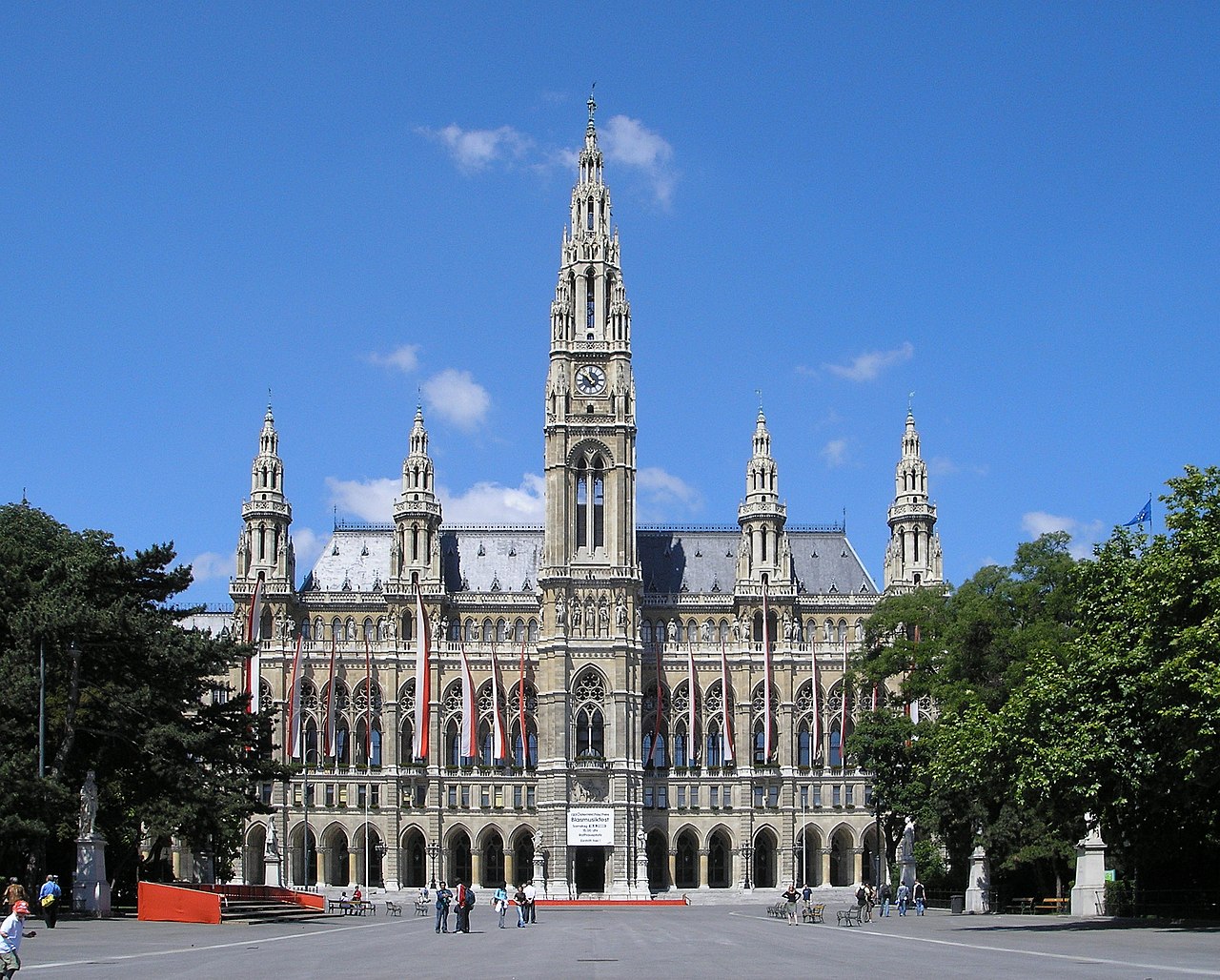
Imperial core, walking distance to all major sights
from €220 / night
Hip + boutique + MuseumsQuartier-adjacent
from €140 / night
Shopping spine + Naschmarkt
from €120 / night
Across Danube Canal, Prater, emerging
from €100 / night
Near Belvedere + embassies + quiet
from €160 / night
Business hotels + train station
from €130 / night
Things to do
7 must-sees, 6 more if you have time, and 7 things to skip. Start with Schönbrunn Palace + Gardens and Hofburg Palace. Most must-sees sit within a 15-minute walk of another stop — the 2 walkable groups below pair them into half-days. First thing to skip: Jun–Aug if you dislike crowds.
Relative positions, not to scale. Numbered points are the must-sees.
Also on the map: Albertina, Mozarthaus Vienna, Leopold Museum, Café Central, Mozart / Strauss classical concerts, Prater + Giant Ferris Wheel (Riesenrad)
Places within a 15-minute walk of each other, grouped into half-days.
Hofburg Palace, St. Stephen's Cathedral (Stephansdom), Kunsthistorisches Museum (KHM), Vienna State Opera (Staatsoper), Naschmarkt, Albertina
Mozarthaus Vienna, Café Central, Mozart / Strauss classical concerts
The must-sees.

1,441-room imperial summer residence + Baroque gardens — UNESCO World Heritage. Palace tour + Gloriette hilltop monument + world's oldest zoo (1752) + Palmenhaus greenhouse. 1/2 day minimum.
Grand Tour with audio guide; State Apartments Tour €28; combined Schönbrunn Pass Classic €49.

Winter imperial residence of Habsburgs — Imperial Apartments (Sisi Museum), Silver Collection, Spanish Riding School, Austrian National Library (State Hall). The political heart of the empire.
Imperial Apartments + Sisi Museum + Silver Collection combo ticket.

Two Baroque palaces + gardens holding Gustav Klimt's "The Kiss" — world's most famous Austrian painting. Also Schiele, Munch, Monet. Upper + Lower separate tickets.
Upper Belvedere adult (+ Klimt); Lower €16.50; combo €29.
.JPG/1280px-Wien_-_Stephansdom_(1).JPG)
12th-century Gothic cathedral at Vienna's center — 137 m South Tower, zigzag-tiled roof, catacombs beneath. Climb 343 steps to South Tower for views.
Nave free. South Tower climb €6.50; North Tower €6; Catacombs tour €6.50.

Imperial art collection in a stunning 1891 palace — Bruegel, Vermeer, Rembrandt, Caravaggio, Velázquez, plus ancient Egypt + Greek/Roman. The world's largest Bruegel collection.
Adult; under-19 free.
One of the world's great opera houses — 1869 Renaissance Revival building. Nightly performances Sep-Jun. Guided tours daily €13.
Balcony seat; standing tickets €3-4 (queue 90 min before show); premium €200+.
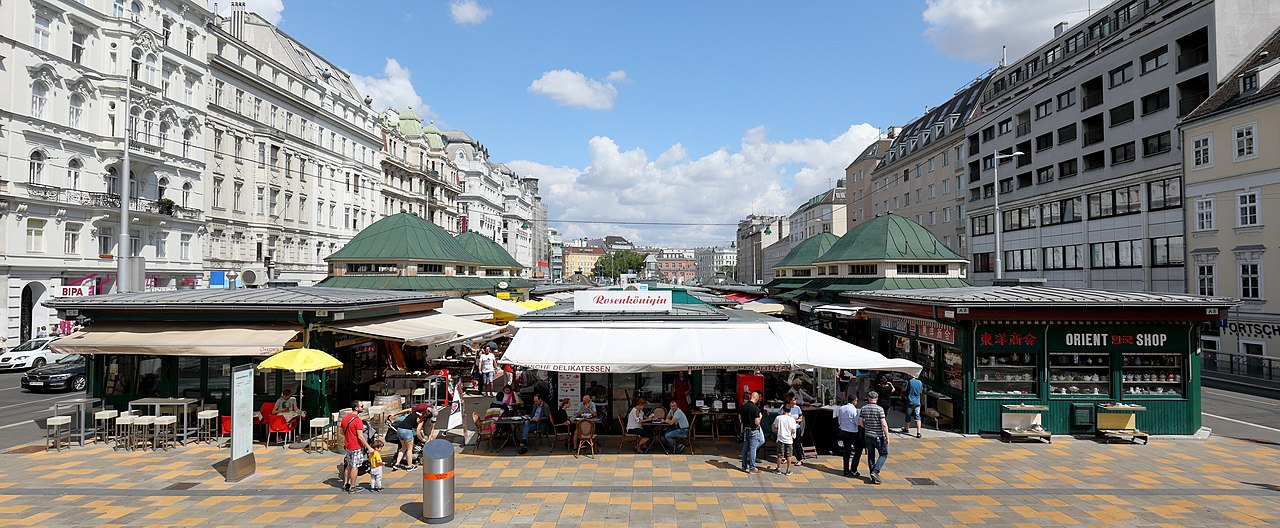
Vienna's biggest food market (120 stalls since 16th century) — Turkish + Middle Eastern + Austrian food, fish, cheese, Saturday flea market. Peak Viennese lunch scene.
Worth it once the must-sees are done. Tap a row for the detail.

19th-century Habsburg palace housing Monet + Picasso + Dürer prints + modernist masterpieces. The iconic Dürer "Young Hare" is here.

Apartment where Mozart lived 1784-1787 + wrote "The Marriage of Figaro". 3 floors of Mozart artifacts + context.

World's largest Egon Schiele collection + Gustav Klimt + Koloman Moser + Austrian Expressionism. Part of MuseumsQuartier complex.

Vienna's most famous coffee house (1876) — Freud, Trotsky, Lenin, Stalin all drank here. Grand Gothic arches + piano music. Coffee + strudel €12-15.
Menu: coffee €5-7; cakes €6-9.
Evening concerts in historic venues — Palais Schwarzenberg, Musikverein, St Peter's Church. Costumed musicians + Mozart/Strauss signature pieces.
€30-80 depending on venue + seat.
1897 Ferris wheel in the Prater amusement park — 65 m, world's oldest operating Ferris wheel. Panoramic Vienna views + The Third Man film history.
Giant Wheel; rest of Prater free entry with individual ride costs.
Not worth your time or money.
Jun–Aug if you dislike crowds
Peak season: highest prices and longest queues
Paying €60 for State Opera standing ticket
Tour operator bundle. Locals pay about €3.50.
Costumed "Mozart" ticket sellers on the street (fake Mozart concerts at inflated prices)
Taxi drivers who don't use meter
Ordering cappuccino after 11:00 (local coffee culture)
Making Nazi jokes
"free walking tours" with aggressive tipping at the end
Off the beaten path — places most visitors never find.
Wine taverns in Vienna's 19th-district wine country — straight-from-the-vineyard Grüner Veltliner + simple Austrian food. Tram 38 from Schottentor.
Friedensreich Hundertwasser's museum — no straight lines, colorful facade. €11 entry.
1897 Ferris wheel — avoid Schönbrunn Gloriette tourist queue + get the same view from a 15-min spin. €13.50.
Cemetery of the Nameless in Vienna's 11th district — unidentified corpses pulled from the Danube buried here, atmospheric + nearly empty of tourists.
Freud's actual apartment-turned-museum — his writing desk, waiting room, patient records. €14.
Plan your days
Copy a plan or let Tripdox build one around your dates.
Viennese breakfast at Café Central (arrive early to skip queue)
Hofburg Palace + Sisi Museum
St. Stephen's Cathedral + climb South Tower
Schnitzel lunch at Figlmüller
Belvedere Palace + Klimt "The Kiss"
Naschmarkt walk + Sachertorte at Café Sacher
Kunsthistorisches Museum or Albertina
Vienna State Opera (book or standing ticket €3-4)
Late dinner + Austrian wine at a Beisl
Hofburg + Stephansdom + KHM
Hofburg Palace
St. Stephen's Cathedral
Figlmüller schnitzel lunch
Kunsthistorisches Museum
Sachertorte at Café Sacher
Vienna State Opera
Palaces + Klimt
Schönbrunn Palace (half-day)
Naschmarkt lunch
Belvedere + Klimt "The Kiss"
Prater + Giant Ferris Wheel at sunset
Dinner at Schweizerhaus beer hall (Prater)
A theme for each day — reorder it around your flights.
Arrive, Hofburg + Stephansdom + schnitzel dinner
Schönbrunn Palace + Zoo + Gloriette
Belvedere (Klimt) + Albertina + Opera evening
Kunsthistorisches + MuseumsQuartier + coffee houses
Day trip — Melk Abbey + Wachau Valley wine
Prater + Leopoldstadt + Naschmarkt
Salzburg day trip OR concert + departure
A perfect day
8 stops from 08:00 to 23:00. Follow it end to end, or borrow the parts you like.
Melange + butter croissant + jam at a coffee house. €10-15 at traditional spots.
Hofburg, Schönbrunn, or Belvedere at opening.
Figlmüller (oversized schnitzel, €25) or local Beisl (€18).
Kaffee und Kuchen at Demel, Sacher, or Central. €12-18. UNESCO-listed cultural heritage.
KHM, Albertina, MAK — or Graben + Kärntner Straße luxury shopping.
Sky Bar at 25hours Hotel, Das Loft — or Schweizerhaus beer hall in summer.
State Opera (€3-4 standing; €45-200 seated) or Mozart/Strauss concert (€35-60).
Viennese tradition — dinner after concert at a Beisl (traditional pub). €30-50.
Estimated spend for the day€153
Based on the 6 of 8 stops that list a cost.
Food & drink
10 dishes to try and 8 places to eat in Vienna, from about €10 to €220 a head.

Veal (or pork — Schweineschnitzel) cutlet pounded thin, breaded, fried in clarified butter. Served with lingonberry + potato salad. €16-25 at a traditional Beisl.

Dense chocolate cake with apricot jam + dark chocolate glaze, invented at Hotel Sacher 1832. €8 at Sacher + Demel.
Thin pastry with apple + cinnamon + raisins + nuts + whipped cream. €6-9 at any coffee house.

Boiled beef with horseradish + apple + chives sauce. Emperor Franz Joseph's favorite. €18-25.

Espresso topped with steamed milk + foam. Not a cappuccino — stronger coffee base. €4.50 at any coffee house.
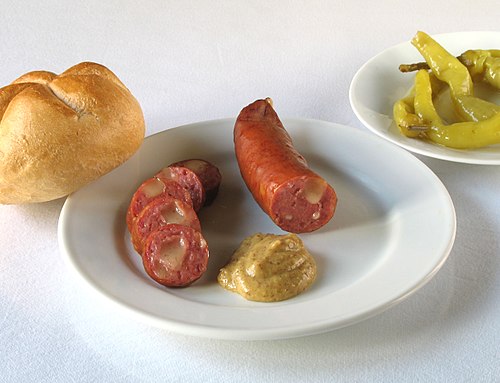
Grilled sausage (with cheese inside) from a Würstelstand corner stall, served with mustard + horseradish + beer.

Shredded fluffy pancake with raisins + plum compote — "Emperor's Mess". Dessert or light lunch.
Hungarian-origin beef stew, spicier than Czech version. Served with bread dumplings or noodles.

Chocolate-marzipan-pistachio spheres. Vienna gift-buying classic.
Per piece.
Grüner Veltliner white wine + Zweigelt red. Heuriger wine taverns in Vienna outskirts (Grinzing, Nußdorf) serve straight from the vineyard.
Per glass at a Heuriger.
Our shortlist, cheap to splurge.
Bitzinger Würstelstand
Gourmet sausage stand · Albertinaplatz (by State Opera)
Signature: Käsekrainer + Moët Champagne pairing (yes, really)
Café Central
Historic coffee house · Herrengasse 14
Signature: Melange + Trotsky's table
Café Sacher
Sachertorte origin · Philharmonikerstraße 4
Signature: Sachertorte with whipped cream since 1832
Figlmüller
Wiener Schnitzel institution since 1905 · Wollzeile 5 + Bäckerstraße 6
Signature: Wiener Schnitzel — bigger than the plate
Schweizerhaus
Beer hall + Prater classic · Prater 116
Signature: Stelze (pork shank) + 0.5L Budweiser; open Mar-Oct.
Demel
Imperial pastry shop since 1786 · Kohlmarkt 14
Signature: Viennese pastries + view of kitchen through glass
Plachutta
Tafelspitz specialist · Wollzeile 38
Signature: Boiled beef Franz Joseph-style
Steirereck
Modern Austrian tasting · Am Heumarkt 2A
Signature: 2-Michelin-star Austrian tasting; book 2+ months ahead.
Getting around
Vienna has 5 U-Bahn lines + extensive trams + buses. From Jan 2026: €3.20 single, €10.20 24h pass, €28.90 7-day. CAT (City Airport Train) €14.90 to airport in 16 min. Walking the 1st District is easy — most sites within 20 min of each other.
Everything
Single €3.20; 24h €10.20; 7-day €28.90. From Jan 2026.
Airport to Wien Mitte
Single; €24.90 return.
Airport to Wien Mitte budget option
Multi-attraction + transit bundle
72h Vienna Pass with Hop-on-Hop-off bus; Vienna City Card cheaper.
Late night + airport
Standard taxi €3.80 + €1.30/km.
4 options · fastest 16 min · cheapest €4.20
CAT non-stop to Wien Mitte
FastestEvery 30 min; airline check-in at Wien Mitte available.
16 min
€14.90
S-Bahn S7 to Wien Mitte (cheaper)
CheapestEvery 30 min; more stops.
25 min
€4.20
Vienna Airport Lines bus 1185 to Schwedenplatz
25 min
€10
Taxi from VIE
Standard airport taxi fare; Uber similar.
30 min
€45
Realistic travel times between the places you'll actually go.
Vienna Airport (VIE)City centre
StephansplatzSchönbrunn
StephansplatzBelvedere
ViennaSalzburg
ViennaBratislava
Practical
Etiquette, money, a few words of German, safety and what to pack.
Do
Avoid
Essentials
Climate
Cultural
Electronics
If something goes wrong
Save these before you land. Tap a number to call from your phone.
Währinger Gürtel 18-20
Billrothstraße 78
Montleartstraße 37
FAQ
Straight answers to the 18 questions first-time visitors ask most.
April-May (mild + blossoming) and September-October (crisp + fall colors) are ideal. December for Christmas markets + classical concerts. Avoid November-March outside Christmas (cold + grey). Summer July-August is warmest but most crowded + hot (26-30°C in heat waves). Ball season (Jan-Feb) has cultural charm but grey weather.
Three days covers essentials: one day Hofburg + Stephansdom + Café Central + schnitzel, one day Schönbrunn, one day Belvedere + museums + Opera. Five days unlocks Prater, Naschmarkt, Heuriger wine taverns, classical concert, and a day trip to Bratislava or Wachau Valley. Vienna is dense with culture; more days always unlock more.
Mid-range daily: €180-220/person — among Europe's more expensive capitals (on par with Paris/Rome, cheaper than London/Amsterdam). Budget: €100/day with hostels + sausage stands + free attractions. Luxury: €700+. Hotels are the biggest expense (€130-220 mid-range). Opera standing tickets €3-4 + free museum entry days = exceptional cultural value.
Austria is in Schengen Area. 60+ nationalities get 90 days in 180 days visa-free. From 2025, US/UK/Canada/Australia/Japan citizens need ETIAS (€7 online, 3-year validity). Indian + Chinese + African passports require Schengen visa. Passport valid 3+ months after departure.
Yes — one of Europe's safest capitals. Violent crime rare; main risks are minor pickpocketing at Christmas markets + crowded U-Bahn. Solo night walks anywhere in central districts safe. Drug possession laws strict; no outdoor drinking tolerated by police. Weather hazards: winter ice on pavements.
Yes — standing-room tickets (Stehplätze) are €3-4 and available same day at the box office. Queue forms 90 min before showtime (or 05:30 for Saturday + premiere evenings). Bring a scarf to tie to the rail as a chair marker. 100-200 standing spots per performance. One of Europe's best cultural bargains.
Order a Melange (Viennese espresso + steamed milk) at a traditional coffee house — Central, Demel, Sacher, Hawelka, Sperl are legends. Sit for 2-3 hours (expected + welcomed). Order a newspaper (supplied free), pastry (apfelstrudel or sachertorte), water refills (automatic). UNESCO-listed intangible heritage.
Wiener Schnitzel at Figlmüller (oversized) or Plachutta; Sachertorte at Sacher or Demel (both claim original); apfelstrudel at any coffee house; Tafelspitz at Plachutta; Käsekrainer sausage at a Würstelstand; kaiserschmarrn dessert; Grüner Veltliner wine at a Heuriger. Modern tasting: Steirereck (2-Michelin-star).
Yes — Vienna has some of the world's best tap water, fresh from the Alps. Restaurants serve free tap water ("Leitungswasser bitte"). Fountains throughout the city are drinkable.
Both are central European gems. Vienna: imperial + elegant + classical music capital + more expensive (€180-220/day vs €130-180). Prague: gothic + bohemian + beer-focused + cheaper. First-time Central Europe: Prague for budget + medieval charm; Vienna for imperial history + classical music. Both are 4 hours apart by train (€30).
Yes — 2h 30m by Railjet train each way, €30-70 round-trip. Mozart's birthplace, Fortress Hohensalzburg, Sound of Music filming locations. Comfortable day trip if you leave by 07:30 + return by 22:00. Alternative: 2-day overnight for better pace.
20+ markets late Nov-Dec 26. Biggest: Rathausplatz (classic + tourist, in front of Town Hall), Schönbrunn Palace, Maria-Theresien-Platz, Am Hof, Belvedere. Mulled wine (Glühwein €5-6), roasted chestnuts, handicrafts, Lebkuchen. Arrive 17:00-21:00 for lit atmosphere.
Yes — Schönbrunn Zoo (world's oldest, pandas + polar bears), Tiergarten Schönbrunn, Natural History Museum (dinosaurs), Technical Museum Vienna, Prater amusement park, Giant Ferris Wheel. Most restaurants welcome kids. U-Bahn stroller-accessible with lifts.
Jan-Feb is the famous Viennese Ball Season — 450+ balls during carnival. Opera Ball (Feb) is most famous but elite; accessible public balls include Blumenball, Kaffeesiederball. Formal dress required (tails for men, gowns for women); tickets €80-300. Evening begins 20:00.
Avoid: costumed "Mozart" ticket sellers on the street (fake Mozart concerts at inflated prices); taxi drivers who don't use meter; ordering cappuccino after 11:00 (local coffee culture); making Nazi jokes; "free walking tours" with aggressive tipping at the end; ordering schnitzel in tourist-area restaurants (2x price + lesser quality).
Yes — Vienna's food scene is diverse. Halal: Wiener Deewan (Pakistani, "pay what you want"), Türk-Grill stands in the 15th + 16th districts. Vegan: Tian (fine dining), Vegie (casual). Kosher: Bahur Tov + Alef Alef in the historic 2nd district Jewish quarter.
Vienna coffee houses are UNESCO-listed + are cultural institutions where you're expected to linger. Paris cafés are quicker + street-focused; Prague coffee houses are cheaper + more varied. Vienna: the melange (not cappuccino) is the signature, and sitting 3 hours is expected. A tradition since 1683 when Jan Sobieski's defeat of the Ottomans left Turkish coffee beans in Vienna.
Yes — the 1st District (Innere Stadt) is best explored on foot. Ringstrasse grand boulevard circles the city in 5.3 km. Most imperial sights within 20-min walk of Stephansplatz center. Beyond 1st District, U-Bahn covers efficiently.
Your move
Describe your trip in a few sentences. Tripdox finds flights, picks hotels, orders your days and builds the full itinerary — priced in EUR or your own currency.
Free · No credit card · 2 minutes
More guides built the same way — read one, then let Tripdox plan it.
.jpg/1280px-Alfama_Rooftops_and_Tagus_River_View,_Lisbon_(54733828355).jpg)
Seven hills + yellow trams + pastel tile facades + fado songs drifting out of Alfama alleys

Volcanic peaks, rice-terrace villages, surf coastlines, and centuries-old Hindu temples

_-_Linke_Wienzeile,_H%C3%B6he_Kettenbr%C3%BCcke(ngasse).JPG/1280px-Mariahilf_(Wien)_-_Linke_Wienzeile,_H%C3%B6he_Kettenbr%C3%BCcke(ngasse).JPG)

.jpg/1280px-Wien_Hauptbahnhof,_2019_(01).jpg)

.JPG/330px-Wien_-_Stephansdom_(1).JPG)


.JPG/1280px-Wien_-_KunstHausWien_(a).JPG)
.JPG/1280px-Wien_-_Sigmund_Freud_Museum_(b).JPG)

