Peak
Jul – Aug
Warm, long days, everyone is here
Average low–high: 16–25°CMonthly rainfall: 60 mmCrowds: Very high

France
The complete 2026 travel guide
The world's most visited city — Haussmann boulevards, world-class museums, café culture, and the short list of buildings everyone recognises on sight.
Free · No credit card · 2 minutes
The short answer
Yes — worth it for Art & Museums, Food, Architecture. Plan 4–6 days, ideally in Apr–Jun · Sep–Oct. The world's most visited city — Haussmann boulevards, world-class museums, café culture, and the short list of buildings everyone recognises on sight.
Go if you want
Think twice if
Paris is a compact, walkable city of 20 concentric arrondissements wrapped around the Seine. The tourist heart sits in the 1st–7th — the Louvre, Tuileries, Eiffel Tower, Saint-Germain, Notre-Dame — all reachable on foot or a short métro ride from each other. Most first-timers base themselves here and spend four to six days working through the landmarks, then layering on museums, neighbourhoods, and one or two day trips.
The city reopens major institutions every few years — Notre-Dame came back in December 2024 after the 2019 fire, the Louvre runs timed mandatory online booking, and the Centre Pompidou is due to close for a multi-year renovation. Book the headline sights (Eiffel summit, Louvre, Catacombs, Sainte-Chapelle) weeks ahead; walk-in queues are either long or impossible.
Outside the centre, Montmartre and the 18th (Sacré-Cœur, cobbled lanes, artist squares) lives up to the postcards but gets pickpocket-heavy in peak season. The 11th (Oberkampf, République) is the young nightlife quarter. Versailles sits 25 minutes by RER C for the grand château-and-gardens day trip. Disneyland Paris is 45 minutes east on the RER A if you're travelling with kids.
Before you go
The details that change a trip — read these before you book.
Sunday lunch is when Paris eats best — book a bistro, go at 12:30, stay 3 hours. Tuesday is the quietest restaurant night.
Every first Sunday of the month (Nov–Mar), national museums — Louvre, Orsay, Orangerie, Rodin, Arc de Triomphe — are FREE. Arrive 20 minutes before opening.
Buy a baguette + cheese + wine at a Franprix supermarket and eat on the Seine steps at Pont des Arts or the Luxembourg Gardens. €10 picnic, best meal of your trip.
Skip dinner cruises on the Seine — book a 1-hour day or sunset Bateaux Parisiens (€16) instead. Same views, fraction of the price, no over-cooked chicken.
The covered passages in the 2e (Passage des Panoramas, Galerie Vivienne, Passage Jouffroy) are 19th-century glass arcades full of oddity shops and cafés. Zero tourists, right in the centre.
Rue Cler (7e) is a postcard-perfect food market street 10 minutes from the Eiffel Tower — and yet somehow still mostly local. Go at 10:00 on a Saturday.
The free hospital Hôtel-Dieu on Île de la Cité (yes, Paris has a 12th-century hospital right next to Notre-Dame) has an A&E that takes walk-ins — faster than private clinics in emergencies.
When to go
April to June and September to early October — mild (12–22°C), fewer crowds than July/August, gardens in full colour, long daylight hours.
Peak
Warm, long days, everyone is here
Sweet spot
BestMild, blooms, manageable crowds
Shoulder
BestCool-to-mild, occasional rain
Off
Cold, grey, Christmas magic in Dec
Bar color follows the average high (cool blue → hot coral); faded bars fall outside the best months. The shaded base is the average low.
Swipe for Jul–Dec →
How long
4–6 days is the sweet spot. Four days is the first-timer minimum: one day for Louvre + Tuileries + Right Bank, one day for Eiffel + Orsay + Left Bank, one day for Notre-Dame + Sainte-Chapelle + Marais, one day for a Versailles trip. Six days lets you add Montmartre properly, Orangerie, Rodin, and Père-Lachaise without rushing.
Arrive, Louvre + Tuileries afternoon
From the week plan
EssentialEiffel + 7e + Rodin + Orsay
From the week plan
EssentialÎle de la Cité — Sainte-Chapelle, Notre-Dame, Conciergerie
From the week plan
EssentialVersailles day trip
From the week plan
EssentialMarais + Pompidou + Canal Saint-Martin
From the week plan
Worth itMontmartre + Pigalle night out
From the week plan
Worth itMarket morning (Bastille Sunday) + Père-Lachaise cemetery + departure
From the week plan
If you have timeBudget
Yes — Paris is one of the pricier cities we cover. Mid-range travelers spend about €240/day per person — pricier than 19 of the other 21 cities we cover. That's roughly €960–€1,440 for 4–6 days, before hotel city tax. Backpackers get by on €110/day; luxury starts around €700/day.
Backpacker
€110
per person · per day
Hostel dorm + bakery breakfast + lunch formule + one museum.
Mid-range
Most common€240
per person · per day
3-star hotel in Marais/Latin Quarter + bistro lunch and dinner + museum pass.
Luxury
€700
per person · per day
4-5 star hotel + fine-dining dinner + taxi transfers + private guide.
Your trip, roughly
≈ €960–€1,440 for 4–6 days
mid-range · per person · before flights
Biggest markups first — what locals pay vs. the first price tourists get quoted.
Seine river cruise
2.8× markupBateaux Parisiens, Vedettes de Paris 1-hour. · Tourist price: Hotel-booked "luxury" dinner cruises.
Croissant at a boulangerie
2.7× markupEspresso at a café counter
2.5× markupTourist price: Sitting at a Champs-Élysées terrace.
Glass of house red wine
2.4× markup3-course bistro lunch formule
2× markupMacaron (Pierre Hermé / Ladurée)
2× markupTaxi CDG to Right Bank
2× markupLegal flat rate. · Tourist price: Unofficial taxi at arrivals hall.
Single métro ticket
Never buy from resellers — just use an app.
Book first
5 things in Paris sell out or need a timed slot. Work backwards from your dates: Eiffel Tower first (6–8 weeks out). The timeline below runs from 6–8 weeks out down to before you fly: 4 sights to book and your hotel.
Book summit tickets at toureiffel.paris 60 days ahead — resellers add 30–50% markup.
Book 6–8 weeks ahead for Apr–Jun and Sep–Oct
Book weeks ahead — walk-up queues frequently turn away.
Tower climb is a separate queue and ticket — book weeks ahead.
Book online with timed entry — door queues are 2+ hours in summer.
Neighborhoods
Le Marais (3e + 4e) for a first visit — medieval streets, modern boutique hotels, Sunday shopping. 6 areas compared below, from €130 to €320 a night. Montmartre (18e) is the best value at about €130 a night. Book hotels 6–8 weeks out for the busiest dates.
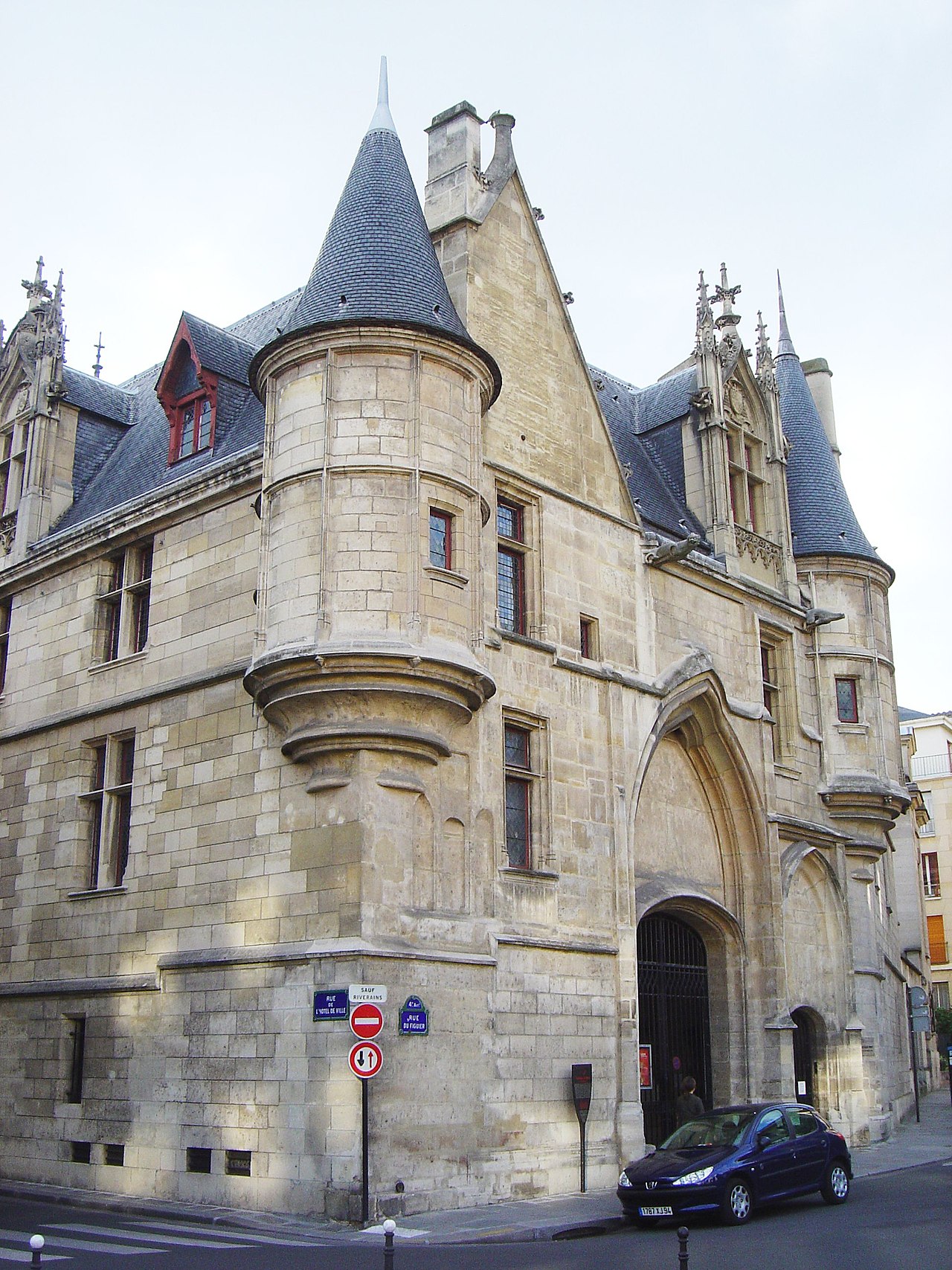
Medieval streets + modern boutique hotels + Sunday shopping
from €210 / night
Literary cafés, antique shops, jazz bars
from €280 / night
Student-y, walkable to Notre-Dame, cheap eats
from €150 / night
Central spine, grand hotels, shopping
from €320 / night

Village hilltop, bohemian, worth visiting not staying
from €130 / night
Local nightlife, young Paris, design hotels
from €170 / night
Things to do
5 must-sees, 14 more if you have time, and 7 things to skip. Start with Eiffel Tower, Louvre Museum, and Notre-Dame Cathedral. Most must-sees sit within a 15-minute walk of another stop — the 4 walkable groups below pair them into half-days. First thing to skip: Jul–Aug if you dislike crowds.
Relative positions, not to scale. Numbered points are the must-sees.
Also on the map: Arc de Triomphe, Sainte-Chapelle, Musée de l'Orangerie, Musée Rodin, Centre Pompidou, Catacombs of Paris, Montmartre & Sacré-Cœur, Le Marais, Saint-Germain-des-Prés, Canal Saint-Martin, Sacré-Cœur Basilica, Église Saint-Sulpice, Jardin des Tuileries, Jardin du Luxembourg
Farther out: Palace of Versailles
Places within a 15-minute walk of each other, grouped into half-days.
Louvre Museum, Musée d'Orsay, Musée de l'Orangerie, Saint-Germain-des-Prés, Jardin des Tuileries
Notre-Dame Cathedral, Sainte-Chapelle, Centre Pompidou, Le Marais
The must-sees.
.jpg/1280px-Tour_Eiffel_Wikimedia_Commons_(cropped).jpg)
The 330 m 1889 lattice tower. Three levels: 1st (57 m), 2nd (115 m, best view/food balance), summit (276 m). Book online 60 days ahead — summit sunset slots sell out within hours in peak season.
Adult summit by lift; €22.40 2nd floor by lift; €14.20 by stairs to 2nd.
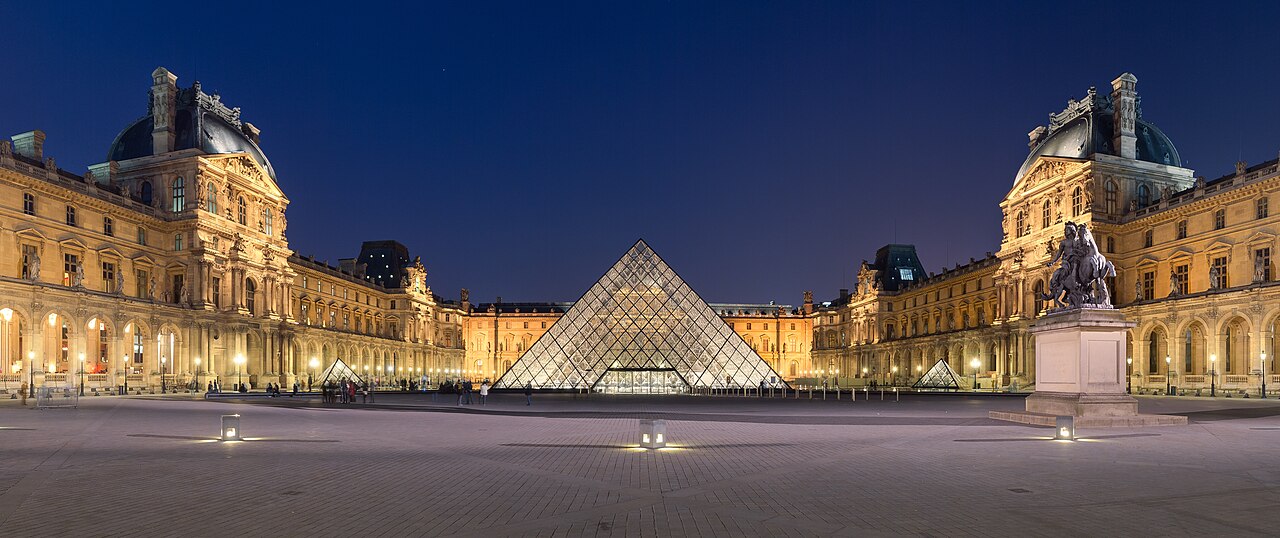
World's most-visited museum — Mona Lisa, Venus de Milo, Winged Victory, 380,000+ objects. Online booking is mandatory, even for "free" entries. Non-EU adults €32, EU adults €22, under-26 EU free.
Non-EU adult. EU adult €22. Under-26 EU free.

12th-century Gothic cathedral on the Île de la Cité, reopened December 2024 after the 2019 fire. The nave, rose windows, and organ were fully restored. Tower climb (387 steps) books separately.
Cathedral free; towers €16 adult, advance booking essential.
.jpg/1280px-Vue_a%C3%A9rienne_du_domaine_de_Versailles_par_ToucanWings_-_Creative_Commons_By_Sa_3.0_-_081_(cropped).jpg)
Louis XIV's 2,300-room 17th-century palace + formal gardens 25 min by RER C from central Paris. The grandest day trip. Hall of Mirrors, Petit Trianon, Marie-Antoinette's estate, Musical Fountains show (weekends Apr–Oct).
Palace + gardens. Passport (full estate) €28.50. Gardens free on weekdays.
Impressionist + Post-Impressionist collection inside a converted 1900 Beaux-Arts train station. Van Gogh, Monet, Degas, Manet, Cézanne, Renoir. Often rated the best single museum in Paris.
Adult; under-26 EU free.
Worth it once the must-sees are done. Tap a row for the detail.

Napoleon's 50 m triumphal arch at the top of the Champs-Élysées. Rooftop (284 steps) is one of the best panoramas in the city — Eiffel + La Défense + 12 radiating avenues.
Adult rooftop; under-18 free; free on first Sunday of the month (Nov–Mar).

13th-century royal chapel with 15 stained-glass windows covering 670 m² — the world's largest medieval stained-glass collection. Small, sharp queue; 45-minute visit.
Adult; under-18 EU free.

Two oval rooms of Monet's late Water Lilies, built to his specification. 90 minutes is plenty. Sits inside the Tuileries Gardens.

Rodin's studio + the rose gardens where The Thinker, The Gates of Hell, and The Burghers of Calais live outdoors. The garden-only ticket is €5 and one of the best deals in Paris.
Full. Gardens only €5.
Modern + contemporary art (Matisse, Picasso, Kandinsky, Warhol) in a famously inside-out 1977 building. Check status before visiting — the building is expected to close for a multi-year renovation.

1.5 km underground bone tunnel 20 m below the city — 6 million Parisians rehoused from overflowing 18th-century cemeteries. Dark, damp, 131 steps down and 112 up. Not for claustrophobes.
Timed entry; advance booking essential.

Cobbled hilltop village in the 18th — Sacré-Cœur basilica (free, 360° view), Place du Tertre artist square, the last Paris vineyard. Pickpocket-heavy; keep phones zipped.
Basilica free. Dome climb €8 (300 steps).

16th-17th century mansions + narrow medieval streets in the 3rd and 4th. Jewish quarter on rue des Rosiers, gay quarter around rue Vieille-du-Temple, Place des Vosges (Paris's oldest planned square). Best Sunday-open shopping in the city.

The 6th — literary cafés (Les Deux Magots, Café de Flore), antique dealers, Jardin du Luxembourg, Latin Quarter edges. Expensive but genuinely charming.
.jpg/330px-Porte_Saint-Martin,_Paris,_France_-_panoramio_(18).jpg)
Iron footbridges and tree-lined tow paths in the 10th — the "young Paris" of wine bars, vintage shops, and Sunday picnickers. Far less touristy than the centre.

White Romano-Byzantine basilica crowning Montmartre, completed 1914. Free to enter. Dome climb (€8, 300 steps) gives a panorama that beats Eiffel's on clear days.

Massive 17th-century baroque church in the 6th, used in The Da Vinci Code. Delacroix frescoes in the first chapel on the right, massive Cavaillé-Coll organ.
Formal French garden between the Louvre and Place de la Concorde — statues, fountain chairs, and the Orangerie museum at the west end. Free.

6th-arrondissement formal garden around the French Senate. Pond sailboats, chess tables, tennis courts, fountain chairs scattered on gravel.
Not worth your time or money.
Jul–Aug if you dislike crowds
Peak season: highest prices and longest queues
Paying €45 for Seine river cruise
Hotel-booked "luxury" dinner cruises. Locals pay about €16.
Restaurants with laminated multi-language menus and touts outside (they're tourist traps, everywhere in 4-5€ "boîtes à touristes")
Unofficial taxis inside the airport terminals
Buying Eiffel Tower tickets from resellers at Trocadéro (30-50% markup)
Street "petition" signers and "found gold ring" performers
The RER B to CDG at rush hour with big luggage (hard to defend valuables)
Off the beaten path — places most visitors never find.
4.7 km elevated park built on a disused 19th-century railway viaduct in the 12e — predates New York's High Line by 20 years. Nearly always empty.
Free small museum in the 9e — the 1830s home of a painter surrounded by a walled rose garden with a café. Locals-only.
Triangular tree-shaded park at the western tip of Île de la Cité, 4 metres below street level. The best sunset spot in central Paris with 0 crowds.
1st-century Roman amphitheatre in the 5e, tucked in a courtyard between apartment buildings. Locals play pétanque on the sand. Free.
Pastel-painted cobblestone street in the 12e — Paris's most Instagrammable block. Residents HATE influencers so visit respectfully.
Plan your days
Copy a plan or let Tripdox build one around your dates.
Breakfast at a neighbourhood boulangerie
Croissant + café crème, stand-up counter, €4–5.
Île de la Cité — Sainte-Chapelle then Notre-Dame
Stained glass first, cathedral second. Book both.
Walk the Seine to the Louvre
20 min through Pont Neuf + Pont des Arts.
Louvre Museum (timed entry)
Focus on Denon wing: Mona Lisa, Venus de Milo, Winged Victory.
Lunch at Bouillon Chartier (or similar classic bistro)
€20 three-course set menu.
Tuileries → Place de la Concorde → Champs-Élysées walk
Arc de Triomphe at the end.
Climb the Arc de Triomphe for sunset
Book online, 284 steps up.
Eiffel Tower sparkle view from Trocadéro
Hourly 5-min light show, on the hour from sunset.
Dinner in Saint-Germain
Le Comptoir du Relais or Chez L'Ami Jean (7e).
Louvre + Marais + Champs-Élysées
Louvre (09:00 opening)
Lunch in the Marais (L'As du Fallafel)
Marais walking: Place des Vosges → Musée Carnavalet → rue Vieille-du-Temple
Centre Pompidou (if open) or Musée Picasso
Arc de Triomphe rooftop sunset
Eiffel Tower sparkle from Trocadéro
Dinner 7e — Chez L'Ami Jean
Museums + village Paris
Musée d'Orsay opening
Latin Quarter lunch
Sainte-Chapelle + Conciergerie
Notre-Dame (reopened 2024)
Métro to Montmartre (Abbesses), walk up to Sacré-Cœur
Montmartre sunset
Dinner at Bouillon Pigalle (€18 menu)
A theme per day — pick your stops from Things to do.
A theme for each day — reorder it around your flights.
Arrive, Louvre + Tuileries afternoon
Eiffel + 7e + Rodin + Orsay
Île de la Cité — Sainte-Chapelle, Notre-Dame, Conciergerie
Versailles day trip
Marais + Pompidou + Canal Saint-Martin
Montmartre + Pigalle night out
Market morning (Bastille Sunday) + Père-Lachaise cemetery + departure
A perfect day
9 stops from 07:30 to 22:30. Follow it end to end, or borrow the parts you like.
Croissant + pain au chocolat + café crème, standing at the counter. €4–5. Go to a small neighbourhood bakery, not the tourist streets.
Louvre / Orsay / Orangerie at opening. You'll have galleries near-empty for the first 45 minutes.
Two- or three-course set lunch (formule). Better value than dinner. €18–30 at places like Bouillon Pigalle or Le Petit Cler.
Marais, Saint-Germain, or Canal Saint-Martin on foot. Stop at a café for an espresso. Heat peaks 15:00–17:00 in summer.
Rodin (€5 garden-only) or Tuileries in warm months, Orangerie in cold.
Wine bar for a glass of red + charcuterie plate. €10–15. Peak Parisian ritual.
On the hour, 5 minutes, from sunset to 01:00. View from Trocadéro is free and frames it best.
Book 2 weeks ahead for the notable spots (Comptoir, Ami Jean, Septime). Walk-in fine at bouillons.
Pont Neuf → Pont des Arts → Pont Alexandre III. All lit. One of the best free things to do in Paris.
Estimated spend for the day€108
Based on the 5 of 9 stops that list a cost.
Food & drink
9 dishes to try and 8 places to eat in Paris, from about €8 to €90 a head.

Laminated butter pastry, best from a neighbourhood boulangerie before 10am.

Seared rib or hanger steak with hand-cut fries + béarnaise or peppercorn sauce.

Chicken slow-braised in red wine with mushrooms, lardons, and pearl onions.

Beef shoulder braised in burgundy wine — classic bistro comfort.
Snails baked in garlic-parsley butter. Starter, ~6 pieces.

Caramelised onions, beef broth, grilled-cheese crouton on top.

Thin pancakes — savoury (galette, buckwheat, with cheese/ham/egg) or sweet (butter-sugar-lemon, Nutella).

Almond meringue sandwiches. Pierre Hermé, Ladurée, Aoki are the top three makers.
Per piece at the top houses; €1 at supermarket quality.
House red/white at a wine bar. Loire, Burgundy, Rhône are the go-tos.
Our shortlist, cheap to splurge.
Bouillon Pigalle
Classic French at diner prices · Place Pigalle, 18e
Signature: 3-course menu for €18; no reservations — queue.
Du Pain et des Idées
Bakery · 34 Rue Yves Toudic, 10e
Signature: Escargot pistache-chocolat pastry; closed Sat-Sun.
L'As du Fallafel
Israeli street food · Rue des Rosiers, 4e
Signature: Special fallafel sandwich; closed Saturdays.
Breizh Café
Breton crêperie · Marais (multiple locations)
Signature: Complète with salted-butter caramel dessert crêpe
Pierre Hermé
Pâtisserie · 72 Rue Bonaparte, 6e
Signature: Ispahan macaron (rose-lychee-raspberry)
Chez L'Ami Jean
Basque bistro · Rue Malar, 7e
Signature: Côte de boeuf for two
Le Comptoir du Relais
Modern bistro · Odéon, 6e
Signature: Changing prix-fixe dinner menu
Walk-in only at lunch; dinner requires booking weeks ahead.
Septime
New French tasting · Rue de Charonne, 11e
Signature: Seasonal tasting; 3-week booking window opens quarterly.
Getting around
Paris runs on the Métro (16 lines) + RER (5 regional express lines) + bus + tram. €2.55 buys one Métro-train-RER ride anywhere in the central zone; unlimited day pass €12.30; weekly Navigo Pass €30.75 (zones 1–5, includes airport + Versailles). From June 2026, all tickets are digital via the Bonjour RATP or Île-de-France Mobilités apps — magnetic cards phased out.
Everything within the boulevard périphérique
Single ride; carnet (10-pack) €19.10.
Airports + Versailles + Disneyland
CDG flat fare; Versailles €4.10.
Ground-level Paris + late-night noctilien
Short hops + weekend rides
Day pass; €0 for first 30 min per trip.
Late-night transfers + heavy luggage
Base + €1.40/km. Flat rates to CDG €56 / Orly €44 from Right Bank.
4 options · multiple airports
RER B from CDG to Gare du Nord
Every 10–15 min, 05:00–23:30. Flat €14 fare. Use the Bonjour RATP app to buy on your phone.
35 min
€14
Roissybus from CDG to Opéra
Every 15 min; bus, drops at Opéra Garnier.
60 min
€17
Official taxi CDG to Right Bank
Flat rate by law; rank outside Terminal 2D, T2E, T2F, T1 arrivals.
50 min
€56
Métro 14 + Orlyval from Orly
New direct Métro 14 connection opened June 2024.
35 min
€14
Realistic travel times between the places you'll actually go.
CDG airportLe Marais (4e)
Orly airportSaint-Germain (6e)
Gare du NordEiffel Tower
Paris centreVersailles
Paris centreDisneyland Paris
Practical
Etiquette, money, a few words of French, safety and what to pack.
Do
Avoid
Essentials
Climate
Cultural
Electronics
If something goes wrong
Save these before you land. Tap a number to call from your phone.
1 Parvis Notre-Dame, 4e
63 Boulevard Victor Hugo, Neuilly-sur-Seine
47–83 Boulevard de l'Hôpital, 13e
FAQ
Straight answers to the 19 questions first-time visitors ask most.
April–June and September–early October are ideal: mild weather (12–22°C), gardens in bloom, fewer crowds than July/August, longer daylight. May and September are the sweet spots. Avoid late July and August if possible — it's the hottest month, many local restaurants close for the owners' holiday, and tourist crowds peak. December is magical for Christmas markets and lights, but cold, grey, and hotel prices climb around Christmas week.
Four days is the first-timer minimum: one day for Louvre + Tuileries + Right Bank, one day for Eiffel + Orsay + Left Bank, one day for Notre-Dame + Sainte-Chapelle + Marais, one day for a Versailles trip. Six days lets you add Montmartre properly, Orangerie, Rodin, and Père-Lachaise without rushing. Seven-plus if you want Fontainebleau, Giverny, or Loire Valley day trips.
Violent crime against tourists is rare. The real risk is pickpocketing — active on Métro line 1, RER B to CDG airport, the Eiffel Tower ticket queues, the Louvre, and the Sacré-Cœur staircase. Keep phones in zipped front pockets, never in a back pocket. The "petition", "gold ring", and "friendship bracelet" scams cluster around Eiffel, Pont des Arts, and Montmartre — walk through without engaging. Central arrondissements (1st–8th) are safe at night; the 18th north of Barbès and parts of the 19th are best avoided after midnight.
For summit (top floor) tickets: yes, 60 days ahead at toureiffel.paris — sunset slots sell out within hours of release in peak season. For the 2nd floor, same-day slots are sometimes available, but expect a 1–2 hour queue. Never buy from third-party resellers at Trocadéro; they mark prices up 30–50%. The staircase tickets (2nd floor, 674 steps, €14.20) are usually walk-up and a good workaround if summit is sold out.
Yes, if you're visiting 4+ paid museums in 2–6 days. The 2-day pass is €70 (covers 50+ museums including Louvre €22, Orsay €16, Rodin €14, Arc de Triomphe €16, Sainte-Chapelle €13, Versailles Palace €21). Visit any three = break-even. The big advantage is skipping ticket queues, though you still need to book timed entry for the Louvre. Not worth it if you're museum-hopping less than that.
No — most restaurant, shop, hotel, and museum staff speak conversational English, especially in the central 1st–8th arrondissements. But ALWAYS open with "Bonjour" (or "Bonsoir" after 18:00) before switching to English. Skipping that greeting is the single biggest reason foreigners perceive Parisians as rude. A handful of phrases (bonjour, merci, s'il vous plaît, pardon, l'addition) go a very long way.
Charles de Gaulle (CDG) is the larger, farther (25 km NE), more international airport — hub for Air France, most long-haul, and Star Alliance. Reach central Paris via RER B €14 (35 min) or flat-rate taxi €56. Orly (ORY) is closer (14 km S), handles more domestic + European flights. Reach centre via Métro 14 + Orlyval €14 (35 min) or flat-rate taxi €44. If you can choose, Orly is faster to reach central Paris. Never use the old Beauvais airport if you can help it — it's 85 km out and takes 80 min on a coach.
Paris hotels are cheaper than London by ~15% and roughly on par with Rome and New York for mid-range. Food is substantially cheaper than London and New York (Parisian bistros serve 3-course lunches for €22; London mid-range lunch is £25+, NYC $30+) and competitive with Rome. Museums are more expensive than London (where most are free) but cheaper than NYC's MoMA ($30) or Met ($30). Overall: mid-range Paris costs €200–280/day; mid-range London £250–320; mid-range NYC $350–450.
Yes — Notre-Dame fully reopened to the public in December 2024 after the April 2019 fire. The restored nave, rose windows, and Cavaillé-Coll organ are back. Entry to the cathedral is free with timed booking (48 hours ahead at notredamedeparis.fr). The tower climb (387 steps, €16) is a separate ticket and books up weeks in advance. Expect some restoration work still visible on the spire exterior.
Absolutely — Paris is one of the world's great walking cities, and its museums, architecture, and neighbourhoods stand on their own. The food scene has expanded well beyond classic bistros: excellent Vietnamese in the 13th, Japanese in the 2nd, North African in the 10th, and a serious specialty-coffee wave across Marais and Canal Saint-Martin. That said — do try a neighbourhood boulangerie. Even people who "don't like bread" change their mind.
Le Marais (3rd/4th arrondissement) is the most-recommended first-timer base: central, walkable to Notre-Dame / Louvre / Pompidou, medieval character, excellent Sunday-open shopping and food. Budget: Latin Quarter (5th) is cheaper but close to everything. Romantic: Saint-Germain (6th) has café culture and literary history but is pricier. Avoid staying IN Montmartre (18th) — charming to visit, but far from everything and more pickpocket activity.
You cannot go up without a ticket, but the tower itself is free to stand under and photograph. Best free viewpoints: Trocadéro (across the Seine — classic framing, especially for the hourly 5-minute sparkle show after sunset), Champ de Mars (the lawn directly beneath), Pont de Bir-Hakeim (for cinematic side angle), Avenue de Camoëns (narrow street with Eiffel at the end — photographer favourite), and Rue de l'Université (the street view from up-close).
For Michelin-starred dinner (Arpège, Le Cinq, Guy Savoy): smart-casual minimum, blazers expected for men, dressy for women. Mid-range bistros: clean casual (no athleisure, no beach shorts). Cafés and brasseries: anything goes. For churches (Notre-Dame, Sacré-Cœur, Sainte-Chapelle): shoulders and knees covered is traditional but only loosely enforced for tourists — a lightweight scarf works. Summer: shorts are increasingly acceptable except at evening reservations.
Budget: €1,600–2,000 (hostel/budget hotel, mostly picnic + lunch formules, walking + métro, 4 paid museums). Mid-range: €3,500–4,500 (3-star hotel in Marais/Latin Quarter, two bistro meals a day, museum pass, one nice dinner, one day trip to Versailles). Luxury: €8,500–12,000+ (4-5 star hotel, fine dining, private tours). Flights extra — round-trip from US East Coast €500–900, from UK £60–200, from India INR 35,000–90,000.
Yes — Paris is surprisingly kid-friendly. Hits: Luxembourg Gardens (pond sailboats, puppet theatre, tennis, pony rides), the Natural History Museum in the Jardin des Plantes (Grande Galerie de l'Évolution is spectacular), Musée de la Magie (magic museum in the Marais), Disneyland Paris (RER A, 40 min), Cité des Enfants at La Villette (hands-on science for ages 2–12), boat rides on the Seine, and the Eiffel Tower climb. Most restaurants accept kids up to 20:00 but expect them to sit at the table.
Yes — Paris tap water is some of the safest in Europe, heavily filtered, and served free at any restaurant ("une carafe d'eau, s'il vous plaît"). The city also has 1,200+ free drinking fountains (the green Wallace Fountains are historic and Instagram-famous) and even sparkling-water public fountains in a few parks. Bottled water at restaurants is €4–6 a bottle for exactly the same thing.
Paris if you want world-class art (Louvre, Orsay, Rodin), classic European architecture, romance, and slow meals. London if you want free museums (British Museum, Tate, National Gallery all free), live theatre, English-language ease, and one of the world's best dining scenes. If you have a week, do both: Eurostar London-Paris takes 2h 15m, €80–200 one-way. 3 days in each is tight but doable.
Avoid: restaurants with laminated multi-language menus and touts outside (they're tourist traps, everywhere in 4-5€ "boîtes à touristes"); unofficial taxis inside the airport terminals; buying Eiffel Tower tickets from resellers at Trocadéro (30-50% markup); street "petition" signers and "found gold ring" performers; the RER B to CDG at rush hour with big luggage (hard to defend valuables); standing in the Louvre's Pyramid queue (use the Rivoli entrance instead); dinner cruises (overpriced and food is hotel-banquet quality).
No — service is included by law (service compris, 15%) and already built into the menu prices. Leaving nothing is completely normal. If you loved the meal, €1–2 at a café or 5% at a nice dinner is generous. Never tip at counter service (boulangeries, bouillons, takeaway). Taxi drivers: round up to the next euro. Hotel housekeeping: €1–2/day is appreciated but not expected.
Your move
Describe your trip in a few sentences. Tripdox finds flights, picks hotels, orders your days and builds the full itinerary — priced in EUR or your own currency.
Free · No credit card · 2 minutes
More guides built the same way — read one, then let Tripdox plan it.

Golden temples, five-dollar street food, rooftop bars in the sky, and 11 million people negotiating a city that somehow never sleeps

_-_2022-06-24_-_5.jpg/1280px-Station_Oberkampf_M%C3%A9tro_Paris_Ligne_9_-_Paris_XI_(FR75)_-_2022-06-24_-_5.jpg)


_The_Dubai_Fountain_at_Dusk_02.jpg/1280px-(UAE)_The_Dubai_Fountain_at_Dusk_02.jpg)
